


Pediatric dental care and eruption of primary teeth 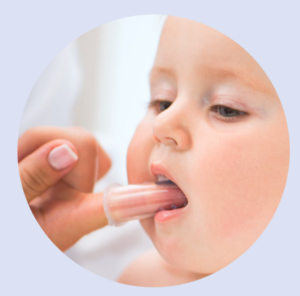
The first teeth appear in children at quite a wide range of ages. In some children, the first primary tooth erupts as early as 4 months of age, while in others it may appear shortly before the first birthday. Parents’ common concerns about the timing, direction, and sequence of tooth eruption are always answered in our clinic. In general, there is no cause for concern if the first tooth appears before the age of one. Even if a tooth erupts at an angle, it is not a problem. There is plenty of space in the jaw, so teeth may initially erupt crooked or even sideways, but they usually align naturally as more teeth emerge.
Dental care
Teeth should be brushed twice a day. With infants, try to find a time during the day when the child is in a good mood and make tooth brushing a pleasant daily routine. Choose a comfortable position for cleaning — the child can be lying down or sitting up. You may stand either behind the child’s head or in front of them, as long as the child is comfortable and you can clearly see the teeth. Try to make brushing playful and fun — for example, sing a song or talk about teeth or germs while brushing. To help distract the child, you can also give them a toy.
What to notice and when to visit the dentist?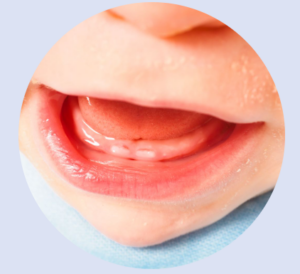
If a child is breastfed at night and enamel damage is noticed, then at the first appearance of white or brown spots on the teeth, a dental consultation should be scheduled. We will diagnose the issue and can apply a protective varnish in the clinic or prescribe a remineralising cream that helps restore tooth structure.
In any case, the first dental visit should take place between 12 and 24 months of age.
At the first visit, the parent sits with the child in the dental chair, and we try to encourage the child to show their teeth. Preparation at home is very helpful — if the child has been gently and playfully introduced to what will happen at the dentist, the first visit will be pleasant for everyone. After successfully showing their teeth, the child can choose a small gift.
Stories about past negative dental experiences should be avoided, as children have no prior experience and such stories may create unnecessary fears.
It is best to tell children that dentists are kind and help children. The child should be encouraged to take care of their health, as they themselves are important and want to be well. Both the parent and the dentist are there to help.
Although it may sometimes seem that the child is very small, they are actually very capable and often participate willingly in treatment. In this way, they feel that it is something they themselves need.
Dental treatment for children up to 19 years of age is FREE in our clinic!*
*An appointment fee of 5 euros applies.
Useful information about children’s oral health can be found on SUUKOOL.EE




 Please find the parking options: